Why Practical Education Is Shaping the Future Workforce
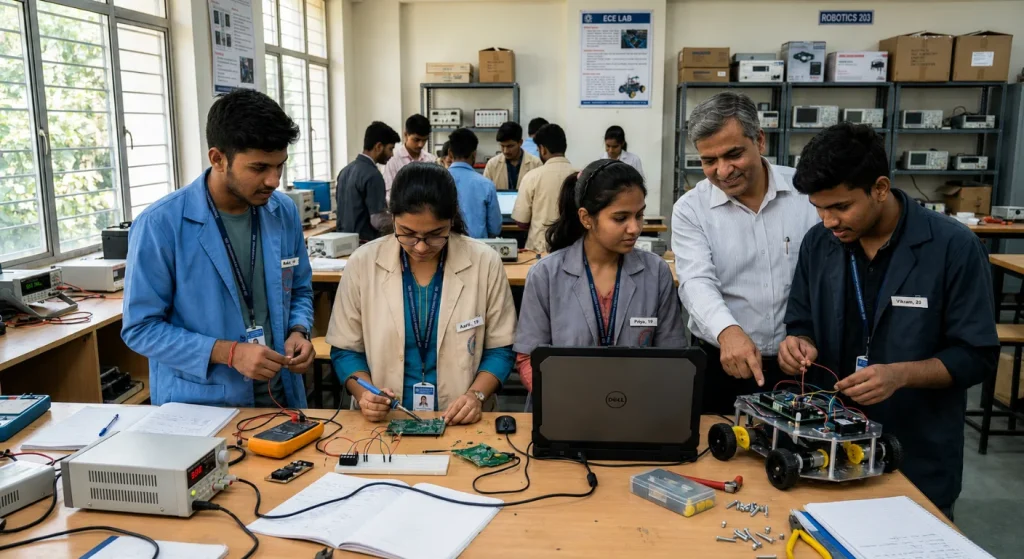
Practical education has become the foundation of modern career success as industries across India increasingly demand professionals who can perform real tasks with confidence and technical accuracy. Employers today value skills that go beyond theoretical understanding, focusing instead on hands-on competence, problem solving ability, and workplace readiness. Students searching for the best polytechnic college in Belagavi are now prioritising institutions that deliver strong practical training aligned with real industry needs. At Maratha Mandal Polytechnic Belagavi, education is structured to ensure students gain meaningful technical experience alongside academic learning, creating a strong bridge between classrooms and professional environments. Practical learning transforms knowledge into usable skill, helping students understand how systems operate in real working conditions while building confidence and technical precision that employers actively seek. This approach strengthens technical education in Belagavi by producing graduates who are ready to contribute from their first day at work. Turning Classroom Learning Into Real Industry Skills Traditional education often focuses heavily on textbooks and examinations, while industries operate through tools, machinery processes and problem solving on the ground. Practical education closes this gap by allowing students to actively work with real equipment, technical systems, and modern workshops that mirror workplace environments. Through hands-on training, students experience how concepts are applied in manufacturing, electrical operations, mechanical systems, and technological processes. Students enrolled at a top polytechnic college in Belagavi benefit when practical exposure becomes a core part of daily learning rather than an occasional activity. Repeated practice builds familiarity with industry tools and improves technical confidence. As students complete real tasks and projects, they develop deeper understanding and stronger skill mastery, making learning more meaningful and career oriented. Building Job-Ready Professionals Through Hands-On Experience Practical education plays a major role in preparing students for employment by developing skills that match real job requirements. Employers prefer candidates who understand technical procedures and safety standards and can operate systems independently with minimal training. Through continuous hands-on learning, students become comfortable handling machines troubleshooting issues and completing assignments efficiently. Institutions focused on skill based education in Belagavi support faster career entry and stronger job performance. Graduates from Maratha Mandal Polytechnic Belagavi gain technical competence that allows them to adapt quickly to professional environments, improving employability and long term career growth. This strong foundation also opens opportunities across manufacturing, construction, automation, electrical services, and industrial sectors. Preparing Students for Future Workforce Demands The modern workforce continues to evolve with technological advancements and industrial expansion. Practical education prepares students not only for current job roles but also for future industry changes by encouraging adaptability and continuous learning. Exposure to modern equipment, digital tools, automation systems and updated industry practices ensures students remain relevant in competitive job markets. Hands-on experience also strengthens problem solving skills and professional responsibility, helping students approach real challenges with confidence. Through industry aligned curriculum and real-world training, Maratha Mandal Polytechnic Belagavi continues to strengthen technical education in Belagavi, preparing students for stable careers and long term professional success. Practical education is shaping the future workforce by creating skilled adaptable and job ready professionals who understand both theory and real-world application. With strong hands-on training industry focused learning and continuous skill development, students gain the confidence and competence needed to succeed in modern industries.
Top Technical Skills Every Polytechnic Student Must Master
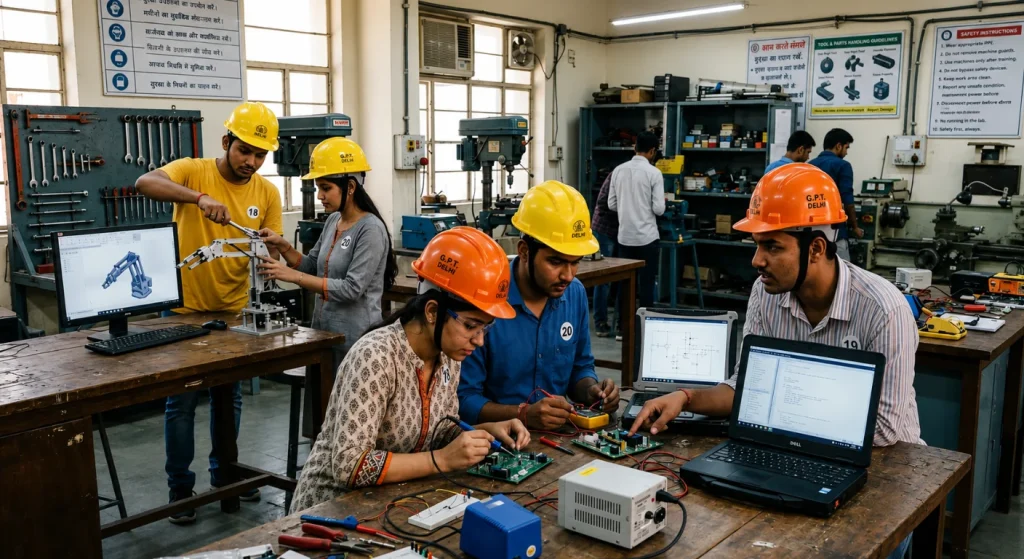
Polytechnic education plays a crucial role in shaping skilled professionals who are ready to meet real industry demands. In a rapidly evolving technical landscape, diploma students must go beyond textbooks and develop hands-on competencies that align with workplace expectations. Institutions such as Maratha Mandal Polytechnic Belagavi focus on skill-oriented learning that strengthens employability and professional confidence. Mastering the right technical skills is the foundation for long-term career success for students studying at a reputed polytechnic college in Belagavi. Core Engineering Skills as the Backbone of Diploma Education Every diploma programme is built on strong core engineering fundamentals. Mechanical Engineering students must gain proficiency in machining, fitting, welding, and basic CNC operations. Electrical Engineering and electronics students need practical exposure to wiring systems, motor controls, circuit testing, and safety practices. Civil Engineering students benefit from hands-on learning in surveying, material testing, and construction basics. For Computer Science students, coding, data structures, and basic networking are key. Automobile Engineering requires skills in engine diagnostics, vehicle systems, and maintenance. All streams also benefit from a strong foundation in Science (Physics, Chemistry, Maths). A reputed diploma college in Belagavi ensures that students develop these essential skills through structured lab sessions and workshops. Practical Workshop and Laboratory Proficiency Technical education is most effective when theory is reinforced through practice. Polytechnic students must be confident in handling tools, instruments, machinery, and testing equipment. Skills such as accurate measurement, equipment calibration, fault identification, and preventive maintenance are critical. Strong workshop exposure helps students adapt quickly to industrial environments, a key advantage offered by quality technical education in Belagavi. Digital and Computer-Aided Technical Skills Modern industries increasingly rely on digital tools and automation. Polytechnic students must develop basic proficiency in computer-aided design software, technical drawing tools, and introductory programming concepts. Familiarity with digital documentation and simulation tools enhances productivity and technical accuracy. Students graduating from the best polytechnic college in Belagavi are expected to be comfortable working in both physical and digital technical environments. Problem-Solving and Applied Technical Thinking Industries value technicians who can think practically and solve real-time problems. Polytechnic students should learn how to diagnose faults, analyse system inefficiencies, and apply logical solutions. Project-based learning, industrial visits, and hands-on assignments strengthen analytical skills and decision-making abilities. A strong problem-solving mindset separates average diploma holders from industry-ready professionals. Communication Skills for Technical Careers Technical knowledge must be supported by effective communication. Polytechnic students should be able to read drawings, explain procedures, prepare basic reports, and coordinate with supervisors and team members. Clear communication improves workplace safety, productivity, and teamwork. Diploma graduates who communicate well find it easier to grow within industrial and technical organisations. Safety Awareness and Quality Standards Understanding workplace safety and quality control is a vital technical skill. Polytechnic students must be trained in safety protocols, equipment handling standards, and quality inspection methods. Knowledge of standard operating procedures and preventive practices ensures responsible performance in industrial settings. Safety-conscious technicians are always in high demand across sectors. Industry Exposure and Skill Readiness Industrial training and internships bridge the gap between classroom learning and professional practice. Polytechnic students must be prepared to work in real industrial environments with discipline, adaptability, and technical fconfidence. Institutions like Maratha Mandal Polytechnic Belagavi emphasise industry exposure to help students transition smoothly into employment after completing their diploma. Shaping Industry-Ready Polytechnic Graduates Technical skills define the professional journey of every diploma student. A strong blend of core engineering knowledge, practical expertise, digital skills, safety awareness, and communication ability creates confident and capable professionals. Choosing the right polytechnic college in Belagavi plays a decisive role in this journey. With its focus on applied learning and industry relevance, Maratha Mandal Polytechnic Belagavi continues to strengthen its reputation as a trusted diploma college in Belagavi delivering quality technical education in Belagavi and shaping future-ready technicians from one of the best polytechnic colleges in Belagavi.
Shaping Tomorrow: Exploring the Future of Computers

In the ever-evolving landscape of technology, the future of computers holds boundless promise and potential. From quantum leaps in processing power to the proliferation of interconnected devices, the next frontier of computing is poised to redefine the way we live, work, and interact with the world around us. Quantum Computing: Unleashing Unprecedented Power At the forefront of computer science, quantum computing represents a paradigm shift in processing power. By harnessing the mind-bending properties of quantum mechanics, quantum computers have the potential to tackle complex problems that are currently beyond the reach of classical computing. From drug discovery to optimizing supply chains, the applications of quantum computing are as vast as they are revolutionary. As computing devices become increasingly interconnected, the Internet of Things (IoT) is set to permeate every aspect of our lives. From smart homes equipped with connected appliances to smart cities with integrated infrastructure, the proliferation of IoT devices will create a seamless web of digital intelligence that anticipates our needs and enhances our daily experiences.. Artificial Intelligence: The Rise of Machine Intelligence Artificial Intelligence (AI) is poised to become the cornerstone of future computing systems, imbuing machines with the ability to learn, reason, and adapt autonomously. From self-driving cars to personalized healthcare, AI-driven technologies will augment human capabilities and revolutionize industries across the board. However, as AI becomes increasingly integrated into our lives, questions surrounding ethics, privacy, and accountability will loom large.. Quantum AI: The Convergence of Minds The convergence of quantum computing and artificial intelligence heralds a new era of computational power. Quantum AI promises to unlock even greater insights into complex datasets, accelerate scientific discovery, and revolutionize fields such as cryptography and materials science. As researchers push the boundaries of what is possible, the synergy between quantum computing and AI will pave the way for unprecedented breakthroughs in the realms of science and technology. Conclusion: Embracing the Future As we stand on the cusp of a new era in computing, the possibilities are as limitless as our imagination. From quantum leaps in processing power to the democratization of artificial intelligence, the future of computers holds the promise of a brighter, more connected world. By embracing innovation, collaboration, and ethical stewardship, we can shape a future where technology serves as a force for good, empowering individuals and communities to thrive in an ever-changing world.
Group Theme Day

Artificial Intelligence: A Journey into the Future

In the realm of technology, few fields have captured the imagination and promise of humanity quite like Artificial Intelligence (AI). From science fiction fantasies to real-world applications, AI has transcended its origins to become a transformative force in nearly every aspect of modern life. The Evolution of AI: AI, once confined to the realms of academia and research laboratories, has now become ubiquitous, powering the algorithms behind search engines, social media feeds, virtual assistants, and autonomous vehicles. What began as a quest to mimic human intelligence has evolved into a multidisciplinary field that blends computer science, mathematics, neuroscience, and cognitive psychology. The applications of AI are as diverse as they are profound. In healthcare, AI-driven diagnostic tools analyze medical images with unprecedented accuracy, aiding doctors in detecting diseases such as cancer at earlier stages. In finance, AI algorithms process vast amounts of data to identify patterns and trends, informing investment decisions and managing risk. Ethical Considerations: Yet, with great power comes great responsibility. The rapid advancement of AI has raised profound ethical questions regarding privacy, bias, and accountability. Concerns about algorithmic bias and the potential for AI systems to perpetuate or exacerbate societal inequalities have sparked calls for greater transparency and oversight in AI development and deployment. The Road Ahead: As AI continues to advance, the possibilities are both exhilarating and daunting. From the prospect of fully autonomous machines to the ethical dilemmas posed by sentient AI, society stands at a crossroads, grappling with the implications of technology that can both augment and challenge our understanding of what it means to be human. Conclusion In the grand tapestry of human progress, AI represents a defining chapter—one marked by innovation, discovery, and the eternal quest to unravel the mysteries of the universe. As we stand on the precipice of a new era, let us tread carefully, guided by wisdom and compassion, as we navigate the boundless potential of Artificial Intelligence. In the end, it is not the technology itself that defines us, but rather how we choose to wield it—for the betterment of all humanity.