Maratha Mandal Polytechnic Belagavi
MARATHA MANDAL POLYTECHNIC
BELAGAVI

MARATHA MANDAL POLYTECHNIC
BELAGAVI
Electronics & Communication Engineering
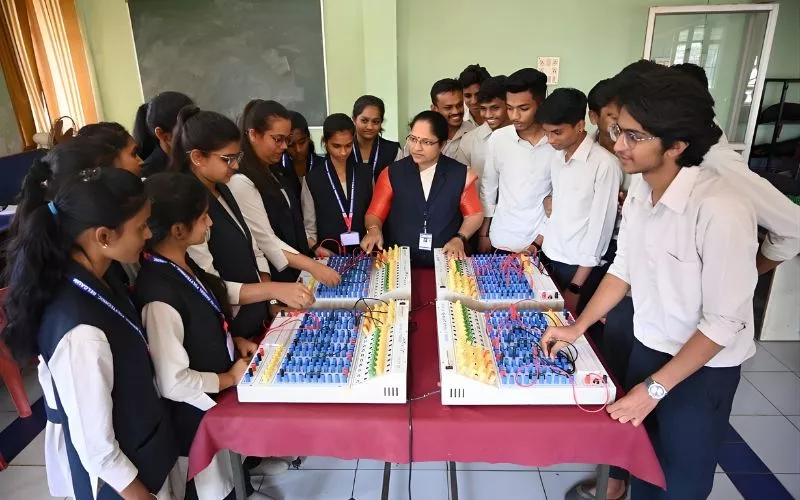
In the Microprocessor and Embedded Systems Laboratory, students work with programmable devices, sensors, and real-time applications, gaining expertise in automation, industrial electronics, and embedded solutions. The VLSI and Semiconductor Laboratory allows learners to explore integrated circuit design, logic simulation, and chip fabrication fundamentals. Additionally, the Instrumentation and Control Laboratory equips students with skills in measurement, control systems, and industrial instrumentation, essential for electronics-based industries.
Modern CAD and simulation facilities further enhance learning, enabling students to model circuits, design PCBs, and simulate systems using industry-standard software. Classroom teaching is reinforced through industrial visits, workshops, seminars, and project-based learning, fostering innovation, critical thinking, and problem-solving abilities.
Graduates from the Electronics & Communication Engineering Department at Maratha Mandal College are fully prepared for careers in telecommunications, embedded systems, electronics design, IoT, robotics, VLSI, networking, research and development, and emerging technology sectors, making them competent, skilled, and industry-ready engineers.
The Electronics & Communication Engineering (ECE) Department at Maratha Mandal College, Belagavi is a premier center for advanced learning in electronics, communication systems, and emerging technologies. Designed to meet the growing demands of the electronics and IT industry, the program equips students with strong fundamentals, practical skills, and industry-ready expertise in areas such as VLSI design, embedded systems, IoT, robotics, wireless communication, and digital signal processing.
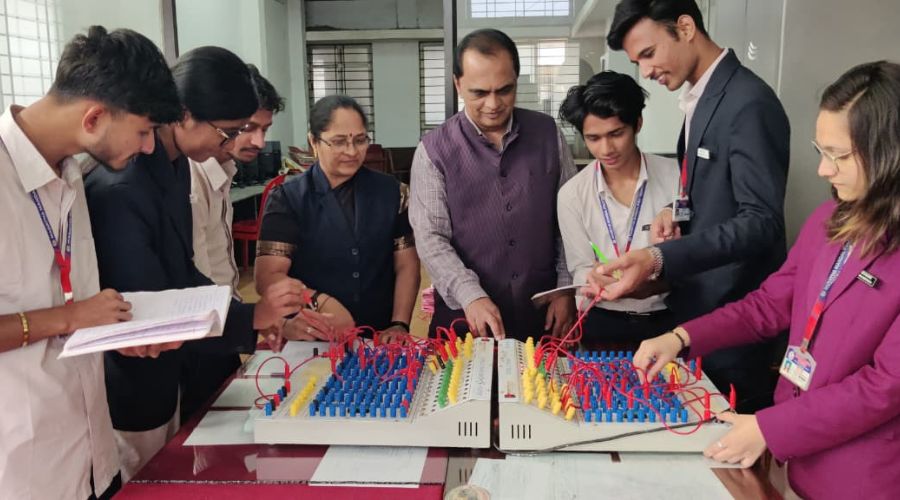
The department features state-of-the-art laboratories and advanced infrastructure, offering hands-on learning opportunities essential for professional competence. The Analog and Digital Electronics Laboratory enables students to design, test, and analyze circuits, microcontrollers, and signal processing systems. The Communication Systems Laboratory provides practical exposure to wireless networks, RF technology, satellite communication, modulation techniques, and modern telecommunication systems.
Our Staff
| SL.NO. | NAME OF STAFF | DESIGNATION | QUALIFICATION | DATE OF JOINING | EXPERIENCE |
|---|---|---|---|---|---|
| 1 | MAHESH JAVALKAR | COORDINATOR | M. Tech (EC) | 17/08/1998 | 27 Years |
| 2 | RAVINDRA MOTAR | COORDINATOR | B.E (CS) | 02/02/1991 | 34 Years |
| 3 | SUMANGALA PATIL | S.G. LECTURER | M. Tech (EC) | 06/03/1992 | 33 Years |
| 4 | GOURI UPPIN | S.G. LECTURER | M. Tech (EC) | 30/08/1996 | 29 Years |
| 5 | SHAILA MALLIKARJUN | S.G. LECTURER | M. Tech (EC) | 01/08/1997 | 28 Years |
| 6 | MANSI SOMANACHE | LECTURER | BE (EC) | 18/01/2024 | 1 Year |
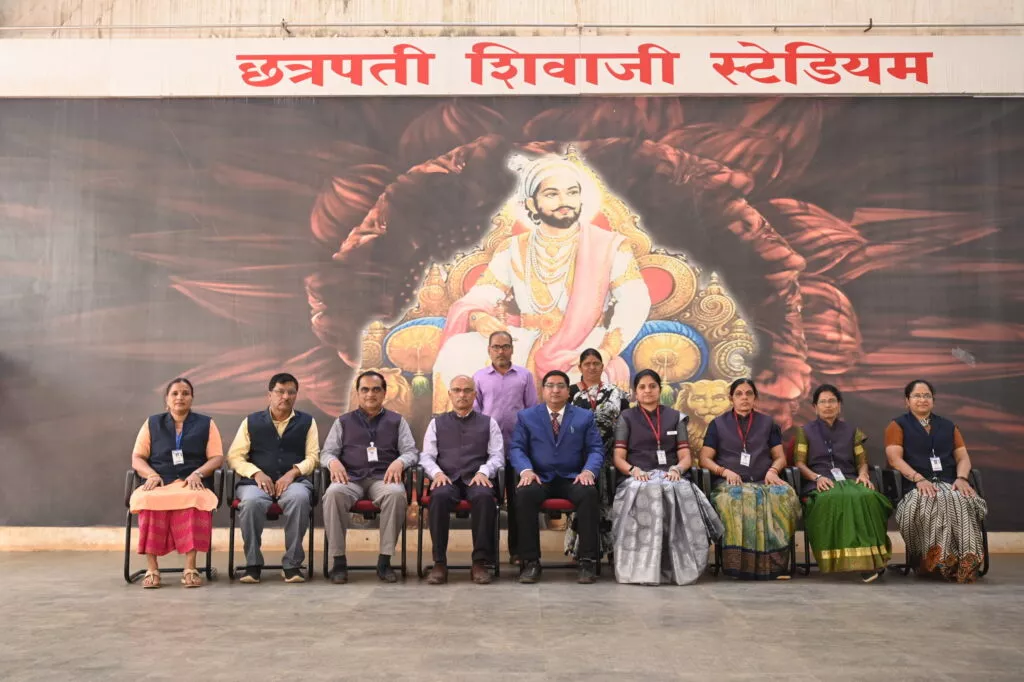
Technical Support Staff
| SL.NO. | NAME OF STAFF | DESIGNATION | DATE OF JOINING | EXPERIENCE |
|---|---|---|---|---|
| 1 | SMITA POTE | INSTRUCTOR | 01/08/1998 | 26 YEARS |
| 2 | SUJATA MATHAPATIL | MECHANIC | 01/08/1992 | 32 YEARS |
| 3 | BALI SHANKAR AMBEWADIKAR | HELPER | 01/08/1991 | 33 YEARS |
| 4 | SHIVAJI GODASE | HELPER | 02/08/1997 | 27 YEARS |
Programme Educational Objectives (PEOs)
(After 2/3 years of graduation, the students will have the ability to) Electronics Engineering Programme is committed to transform students into competent professionals, responsible citizens. On completing the diploma programme, the students should have acquired the following characteristics.
Demonstrate, Update and adapt domain knowledge in the area of electronics and communication engineering and the allied fields to propose solutions for the core industry in the ever-changing global enterprise with ethical practices.
Assume leadership roles and succeed in their chosen career path, in industry or public service through engineering ability, life skills and multidisciplinary skill set acquired.
Pursue higher education institutes of national level.